

Cutting board care
A good wooden cutting board lasts for years, but wood needs care. The most important step is oiling. Oil fills the pores, helps keep moisture out and prevents your board from drying out, becoming rough or getting damaged more quickly.
Why our acacia and bamboo cutting boards are unique
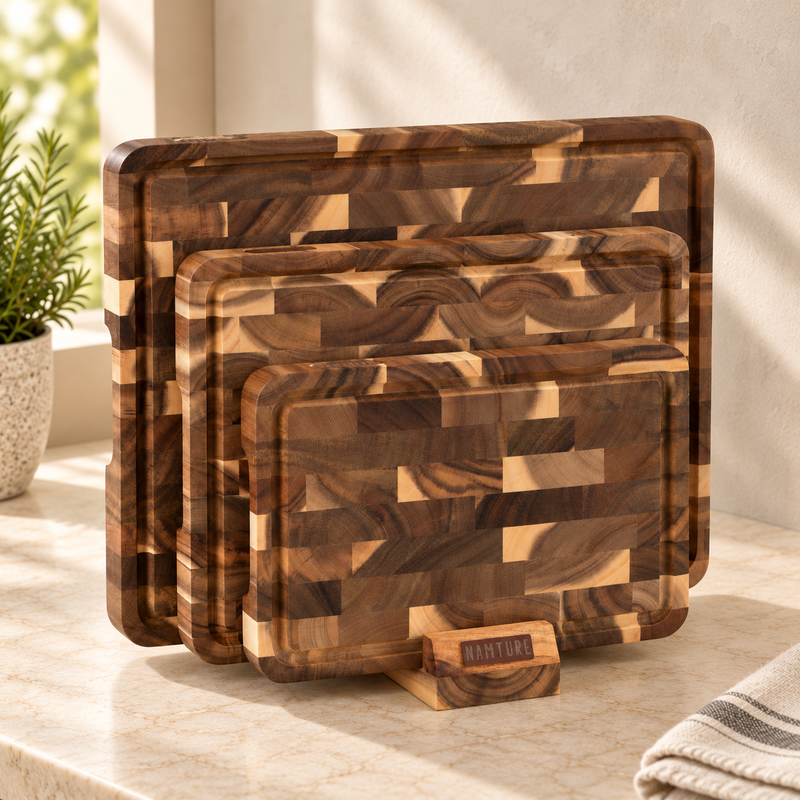
Our acacia and bamboo cutting boards are treated with top-quality oil at the factory. This creates a strong base layer that immediately improves water resistance and protects the surface. In practice, our boards therefore feel much less prone to scratching than many standard boards with little oil treatment.
Home care maintains this premium base layer, keeping your board beautiful for longer.
Which cutting board oil do we recommend
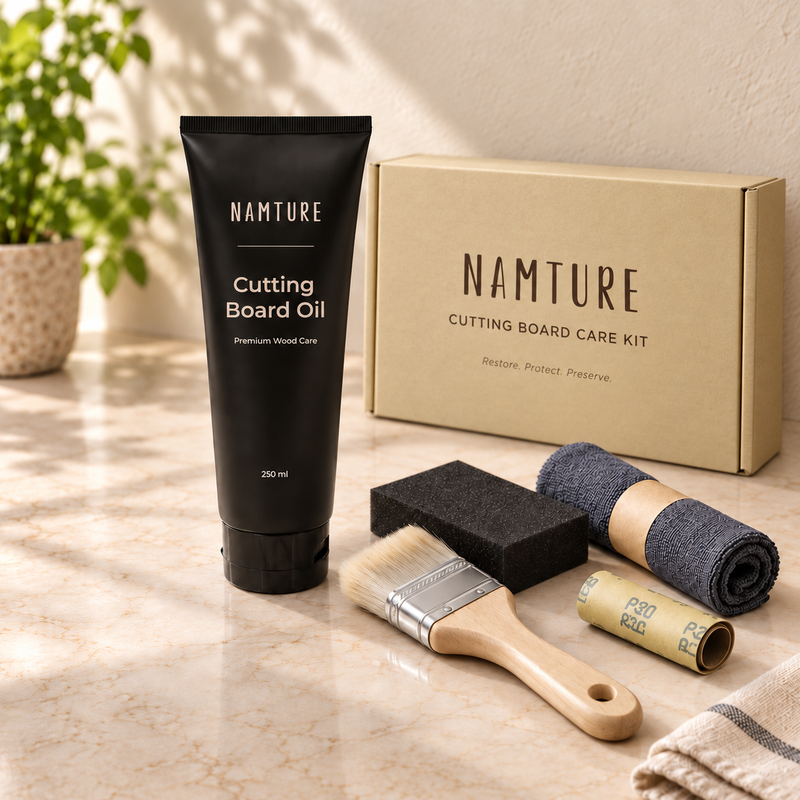
We recommend two options. Ideally, start with the premium option, which best matches our original factory treatment. For an affordable, straightforward care routine, food-grade mineral oil is a very good choice.
Premium option (matches the original treatment)
The finish resists common liquids such as water, coffee, tea, fruit juice, milk and wine (DIN 68861 1A). This cutting board oil is also food-safe (EN 1186, parts 5 and 14).
Why this is the best choice
- Best matches a high-quality factory treatment
- Helps maintain water resistance and improve stain resistance
- Gives a luxurious, well-cared-for appearance
Link
Premium cutting board oil
Affordable option (for regular care)
Mineral oil is odourless, easy to use and ideal for regular care. Always choose food-grade mineral oil intended for cutting boards or kitchen worktops. It is a good option for a simple refresh while maintaining basic protection.
When this is ideal
- When you want an affordable oil for periodic care
- When your board looks a little dry or dull
- When you want a quick, easy refresh without extra steps
Link
Mineral cutting board oil
Which oils should you avoid
Avoid kitchen oils such as olive oil, sunflower oil and similar cooking oils. Over time, these can oxidise, become sticky or develop a stale smell. This is difficult to fix because the oil soaks into the wood.
Oiling your cutting board
Step 1: clean and allow to dry completely
- Wash the board briefly with warm water and mild soap if needed
- Rinse briefly and do not soak the board
- Dry immediately with a clean cloth
- Stand the board upright so air can circulate on both sides
- Allow it to dry completely, preferably overnight
Important: oiling a damp board traps moisture inside. Make sure it is thoroughly dry.
Step 2: lightly sand only if needed
If the board feels rough or you want to smooth knife marks, sand very lightly with fine grit (for example, 240 to 320), following the grain. Remove all dust afterwards.
Applying premium oil
- Make sure the board is clean and completely dry
- Apply a very thin coat with a cloth or brush, following the grain
- Allow to dry and cure according to the instructions on the packaging
- Apply a second thin coat if needed for extra protection
Applying mineral oil
- Put a small amount of oil on a clean, lint-free cloth
- Rub a thin layer over the entire surface, including the sides
- Leave to soak in for 20 to 30 minutes
- Wipe away all excess oil until the board feels dry
- Leave to rest for a few hours, preferably overnight
How often should you oil
Your board already has a premium treatment, so it usually needs little care. This routine works well for most kitchens:
- Normal use: a thin maintenance coat every 3 to 6 weeks
- Heavy use or frequent rinsing: every 2 to 4 weeks
- Premium refresh: every few months, or when water stops beading as well
Quick test
Put a little water on the board. If it beads, the finish is in good condition. If it soaks in quickly and the wood immediately darkens, it is time to oil.
Extra tips for a long life
- Never put it in the dishwasher
- Do not soak it in water
- Always dry it immediately
- Dry upright for good air circulation
- Use both sides if your board is designed for this
Frequently asked questions
Will oil make my board darker
Yes, usually a little. This is normal and brings out the grain beautifully. Premium oil may deepen the colour through its combination of oil and wax.
Can I switch between mineral oil and premium oil
Yes. Mineral oil works well for regular care. To switch to premium oil, make sure the board is clean, completely dry and not greasy, so the finish can adhere properly.
My board feels rough after cleaning. What should I do
Allow it to dry completely, sand very lightly with fine grit, remove the dust and apply a thin coat of oil.